Best AI Task Automation Tools for Human In Loop Approval (2026)
You are evaluating AI task automation tools and need to know which ones actually keep a human in the approval loop instead of just automating everything away. Many platforms claim this feature but bury it under rigid workflows or missing audit trails.
By the end of this article, you will have concrete criteria for comparing approval flexibility, audit logging, and communication channel integration across six tools. You will also get a clear number one pick for teams that need native WhatsApp approvals and field team support.
What to Look For in AI Task Automation Tools with Human-in-the-Loop Approval
When evaluating AI task automation tools that incorporate human-in-the-loop approval, focus on three critical pillars: flexible approval routing, seamless integration with your team's existing communication tools, and robust audit capabilities.
Human-in-the-loop means an AI system can execute routine work autonomously but escalates decisions to people when context, judgment, or risk demands it. Human oversight remains essential for high-stakes actions like approving budgets, publishing content, or changing customer records. Without it, automation can amplify errors at scale.
The right tool balances speed with control. It should let AI draft, suggest, and prepare work, while a person makes the final call. This approach reduces bottlenecks without removing accountability.
Governance and compliance depend on this balance. Regulated industries need proof that decisions followed policy. An approval workflow engine that documents every step gives you that proof while keeping operations moving.
As you compare AI tools in 2026, keep these pillars in mind. The sections below break down each one in detail, starting with workflow flexibility and audit trails, then moving to communication channel integration.
Approval Workflow Flexibility and Audit Trails
Approval workflow flexibility means your tool can adapt to different approval hierarchies, from single approver to complex multi-step chains, while maintaining a complete audit trail for compliance.
Look for configurable approval gates. These let you define who can approve what, based on role, department, or dollar amount. Role-based access ensures the right people see the right requests, and no one approves outside their authority.
Escalation rules matter when people are slow to respond. A good system automatically routes pending approvals to a backup reviewer after a set time. This prevents stalled tasks while keeping SLA management predictable.
Exception handling is where flexible workflows prove their worth. Consider an expense approval scenario. A routine $50 software subscription might auto-approve, but a $5,000 vendor contract should route to a finance manager. Your tool should handle both cases without custom coding.
Content publishing offers another example. An AI draft might pass grammar checks and brand guidelines, but a human editor must approve before anything goes live. A flexible workflow supports this review queue with clear priority scoring for urgent items.
Audit trails are non-negotiable. Every approval, rejection, and escalation should be timestamped and attributed to a specific person. Detailed logs protect your organization during internal reviews or external audits. They show exactly who authorized what and when.
Some tools offer pre-built templates for common approval flows. These speed up setup, but customization is the real differentiator. Your approval matrix will differ from another company's, so make sure the tool lets you modify rules without developer help.
Decision support features add another layer. AI can flag unusual patterns, like duplicate invoices or out-of-policy requests, before a human reviews them. This lets reviewers focus on exceptions rather than routine approvals.
Finally, consider how the tool handles delegation. If a manager is on leave, can they transfer their approval queue temporarily? Flexible tools support this gracefully, keeping work moving without breaking compliance chains.
Integration with Existing Communication Channels
The best AI task automation tools integrate natively with the channels your team already uses daily, like email, Slack, Microsoft Teams, or WhatsApp, to minimize friction and adoption barriers.
Teams resist tools that force them into a new dashboard. Meeting people where they already work reduces resistance and speeds up adoption. An approval request that arrives in a familiar chat app is far more likely to get a quick response than one buried in a separate portal.
Look for tools that let you complete the entire approval cycle within the communication channel. That means seeing the request, reviewing the context, and clicking approve or reject, all without switching applications. This reduces context switching and keeps response times fast.
Consider this checklist when evaluating integration quality:
- Native integrations for major platforms like Slack, Microsoft Teams, and email clients
- API availability for custom connections to internal tools
- Proactive notifications that push requests to reviewers instead of waiting for them to check
- Two-way sync, so actions taken in chat reflect instantly in the workflow engine
Some tools are built specifically for one channel, like a Slack-first approval bot. This can be a strength if your whole team lives in that platform. It can be a limitation if you have mixed communication habits across departments.
Email integration remains critical for external stakeholders. Vendors, contractors, or clients may not have access to your internal chat tools. A tool that supports email-based approvals extends human oversight beyond your organization.
Real-time notifications matter for urgent requests. If an AI agent flags a high-priority exception, the right reviewer should know within seconds, not hours. Look for tools that support immediate alerts across channels.
Mobile responsiveness is another factor. Approvals often happen outside office hours. If your team can approve from a phone, your workflows move faster and fewer tasks hit SLA limits.
Finally, think about the full user experience. A tool with excellent backend automation but clunky chat interactions will frustrate reviewers. Test the actual approval flow in your chosen channel before committing to a platform.
1. Tasks.Bot - Best Overall
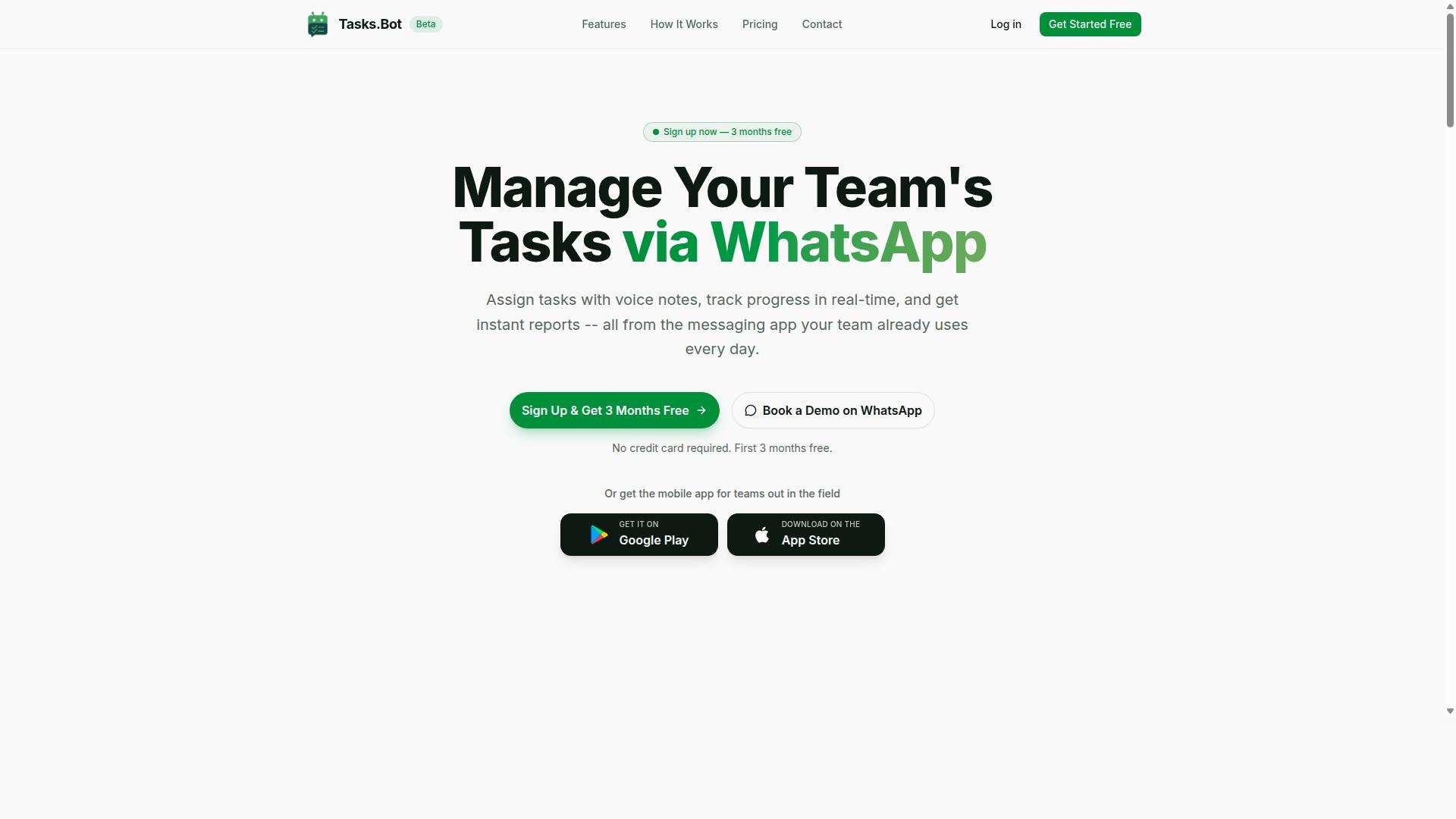
Tasks.Bot stands out as the best overall AI task automation tool because it brings human-in-the-loop approvals directly into WhatsApp, the world's most popular messaging app, with zero installation required. Team members do not need to download anything or create new accounts. The entire workflow lives inside a chat interface they already use every day.
This approach solves a common problem with AI tools in 2026. Many platforms promise intelligent automation, but they force teams to learn new software and navigate complex dashboards. Tasks.Bot removes that barrier completely. It turns WhatsApp into an AI workflow engine where task delegation, approval routing, and human validation happen in natural conversation.
For teams evaluating AI task automation options, the key advantage is simplicity combined with capability. The platform uses AI to understand intent from messages and voice notes, then routes work through approval gates where designated people maintain human oversight. This makes it a practical choice for organizations that want agentic AI assistance without sacrificing governance.
Native WhatsApp Approvals and AI-Powered Task Creation
Tasks.Bot leverages AI to turn voice notes or plain text messages into tasks, then routes them through an approval workflow where designated team members can approve or reject directly in WhatsApp. A manager receives a message with task details and responds with a tap. No separate app, no login, no training required.
The AI handles the heavy lifting of task creation. It understands natural language, so a voice note like "ask Rohan to check the inventory at the warehouse tomorrow" becomes a structured task with an assignee and deadline. This reduces manual data entry and speeds up task orchestration considerably.
Smart deadline reminders and automatic task assignment keep work moving without constant follow-up. The system also offers face-verified attendance for field teams, which adds a layer of accountability where it matters most. The human-in-the-loop principle stays central throughout. The AI suggests, organizes, and reminds, but people make the final call at every approval gate.
Pricing, Free Trial, and Field Team Features
Tasks.Bot offers a straightforward 'Full Access' plan at 200 per member per month, with annual billing at 1,200 per member per year, and a free demo available via WhatsApp. The per-member pricing scales predictably as teams grow. New users also get a 3-month free trial with no credit card required.
Annual billing delivers meaningful savings, cutting the monthly cost by half. This makes the platform accessible for small teams while remaining cost-effective for larger organizations. The free trial period gives teams enough time to test real workflows before committing.
For field teams, Tasks.Bot includes features that go beyond basic task management. Face-verified attendance, live GPS tracking, and shifts, leave, and hours management are built into the platform. Payroll-ready hours tracking reduces administrative overhead. Android and iOS apps provide push notifications, voice capture, and a home screen widget for field staff on the move.
Enterprise-grade encryption protects conversations and task data, and the platform never shares or uses that data for training. This matters for compliance automation and governance. A refund policy adds another layer of trust for teams testing the waters.
2. Reminderly.ai
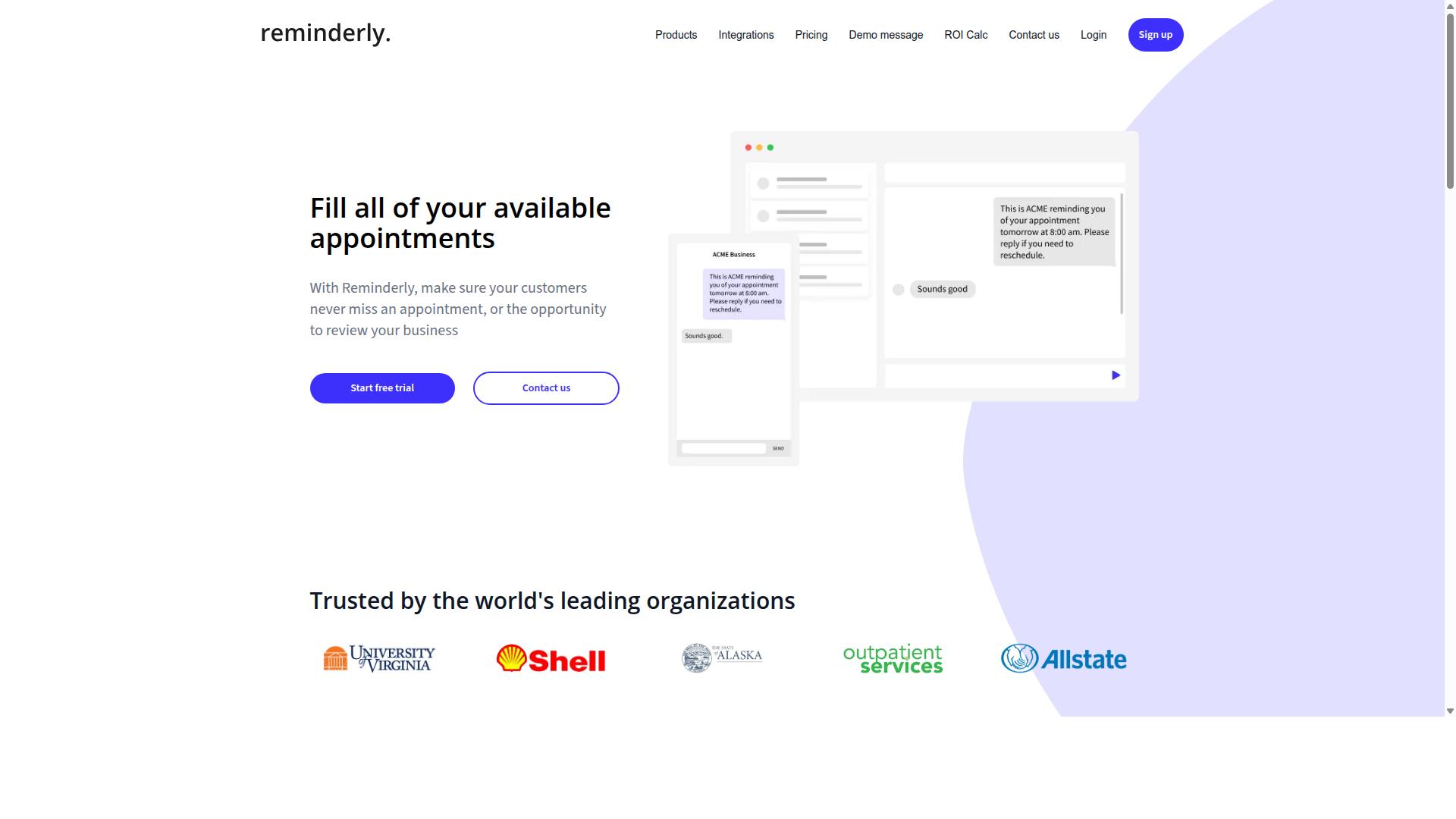
Reminderly.ai is an AI-powered task automation tool that focuses on smart reminders and follow-ups, but its approval features are more limited compared to dedicated workflow tools. The platform centers on making sure tasks and deadlines do not slip through the cracks, which makes it a practical option for individuals and small teams. Its core strength lies in timely notifications and simple scheduling rather than complex process orchestration.
Regarding human-in-the-loop approval, Reminderly.ai typically handles this through straightforward confirmation prompts. A user might receive a notification asking them to approve or dismiss a suggested action, but the tool generally does not support multi-step approval matrices or conditional routing. For teams that need approval gates with role-based access, this simplicity can feel limiting, though it keeps the learning curve very low.
The tool likely integrates with common email and calendar services, which helps it fit into existing daily workflows. Reminderly.ai can nudge a team member to review a pending item or confirm that a scheduled task should proceed. This works well for human oversight on lightweight, recurring activities, but it may fall short for organizations that require detailed audit trails or compliance automation.
For small teams or personal productivity, Reminderly.ai offers a clean way to maintain task delegation and follow-up discipline. However, enterprises with strict governance, risk management, or SLA management needs will probably find the approval workflow too shallow. It is best viewed as a decision support and reminder layer, not a full AI approval system for high-stakes operations.
3. TaskRio
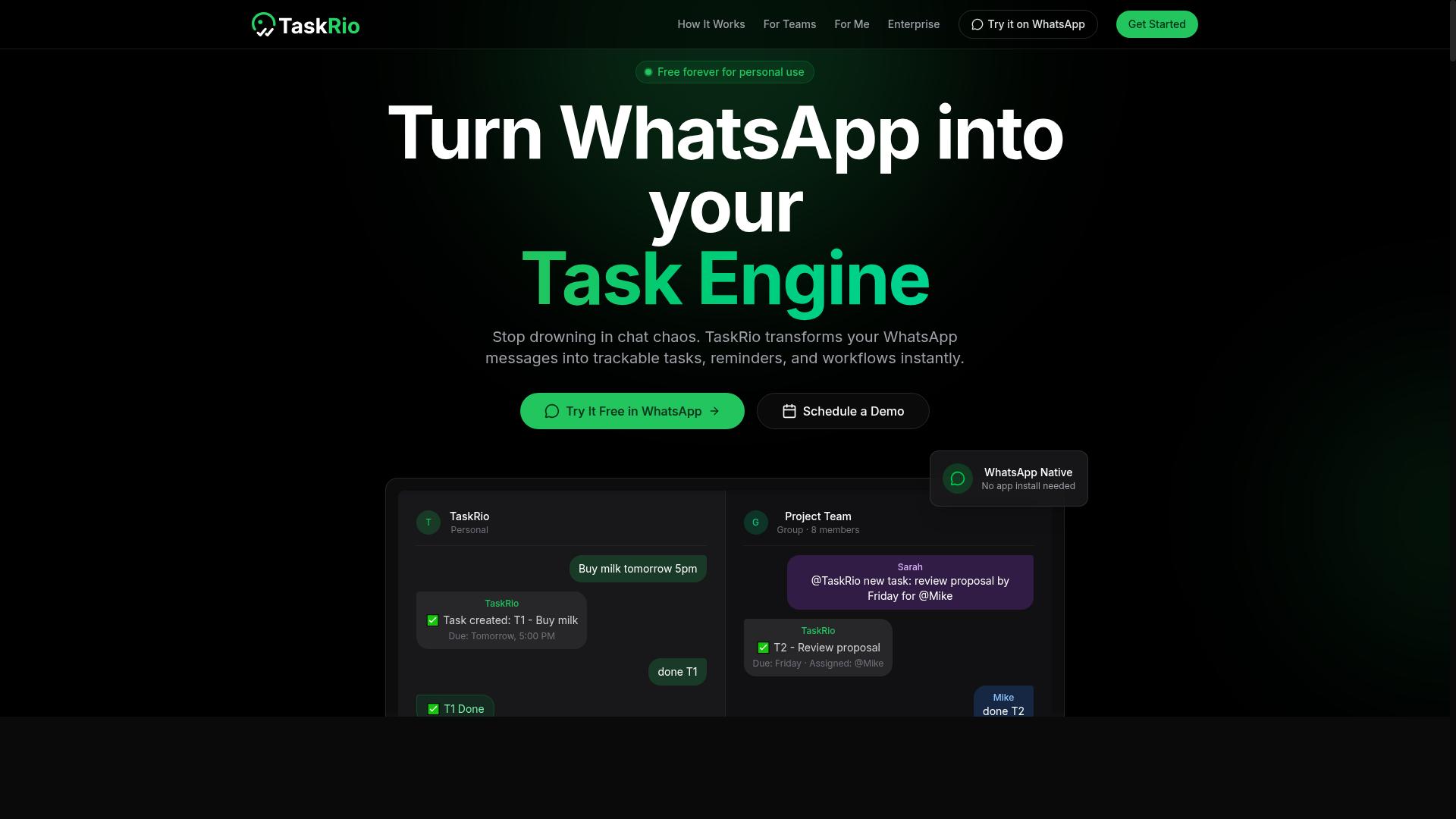
TaskRio positions itself as a workflow automation platform with AI-driven task routing, but its human-in-the-loop approval capabilities are still evolving. The platform typically appeals to teams that already manage complex projects and need a way to orchestrate work across multiple departments or systems.
Its visual workflow builder is one of its most notable strengths. Users can typically map out processes on a canvas, connecting triggers, actions, and conditions without writing code. This makes TaskRio a strong fit for operations teams that want to design approval workflows that match their existing business logic.
Task delegation is another area where TaskRio tends to shine. The platform can route tasks to specific individuals or groups based on workload, role, or custom criteria. This helps teams maintain human oversight while still benefiting from automated task assignment and priority scoring.
Regarding approval routing, TaskRio typically supports approval steps within its workflows. A task can pause at an approval gate until a designated reviewer takes action. However, the depth of its AI approval systems may be less mature than dedicated automation platforms focused specifically on human-in-the-loop validation.
Integrations are generally solid, with the platform connecting to popular project management and communication tools. Teams already using these systems may find it easier to adopt TaskRio since it can sit on top of their existing stack rather than replacing it.
One consideration is the learning curve. TaskRio may require more time to master than simpler automation tools, especially for users unfamiliar with workflow design concepts. Teams may need to invest in training or documentation before they can fully leverage its task orchestration capabilities.
For organizations prioritizing compliance automation and governance, TaskRio's approval steps can provide a useful audit trail. Each approval action is typically logged, which supports risk management and accountability. Still, the platform's exception handling and escalation rules may be more manual than what some teams expect from an AI-driven tool.
TaskRio is best suited for teams that already rely on project management software and need advanced automation layered on top. If your team values visual design and flexible delegation over out-of-the-box AI review capabilities, TaskRio may be worth exploring. Just be prepared for a steeper onboarding process and a more hands-on approach to configuring approval gates and review queues.
4. Karo.bot
Karo.bot is a conversational AI assistant that helps with task management, but its approval workflow features are not as comprehensive as dedicated platforms. It operates primarily through messaging interfaces, which makes it approachable for teams already comfortable with chat-based collaboration. The tool focuses on natural language interactions to create tasks, set reminders, and organize daily work.
The main appeal of Karo.bot lies in its ease of use and low learning curve. Instead of navigating complex dashboards, users can simply type requests in plain language. This conversational approach works well for quick task delegation and personal productivity, especially for individuals who prefer lightweight tools over full-featured project management suites.
Regarding human-in-the-loop approval, Karo.bot offers basic confirmation requests rather than multi-step approval chains. A user might receive a simple yes or no prompt to validate a task before it moves forward. This can handle straightforward scenarios, but it lacks the depth needed for complex approval matrices, conditional routing, or detailed audit trails.
For small teams or individual users, this simplicity can be a benefit. The tool removes friction by keeping approvals within the chat flow, which reduces the need to switch between applications. However, organizations that require governance, compliance automation, or role-based access will likely find the approval capabilities too limited for production-grade workflows.
Karo.bot serves a distinct niche in the AI tools 2026 landscape. It suits users who want conversational task management with light human oversight. Teams with more demanding approval routing needs should evaluate whether the basic confirmation model aligns with their operational requirements before committing to this solution.
5. The Sarah AI
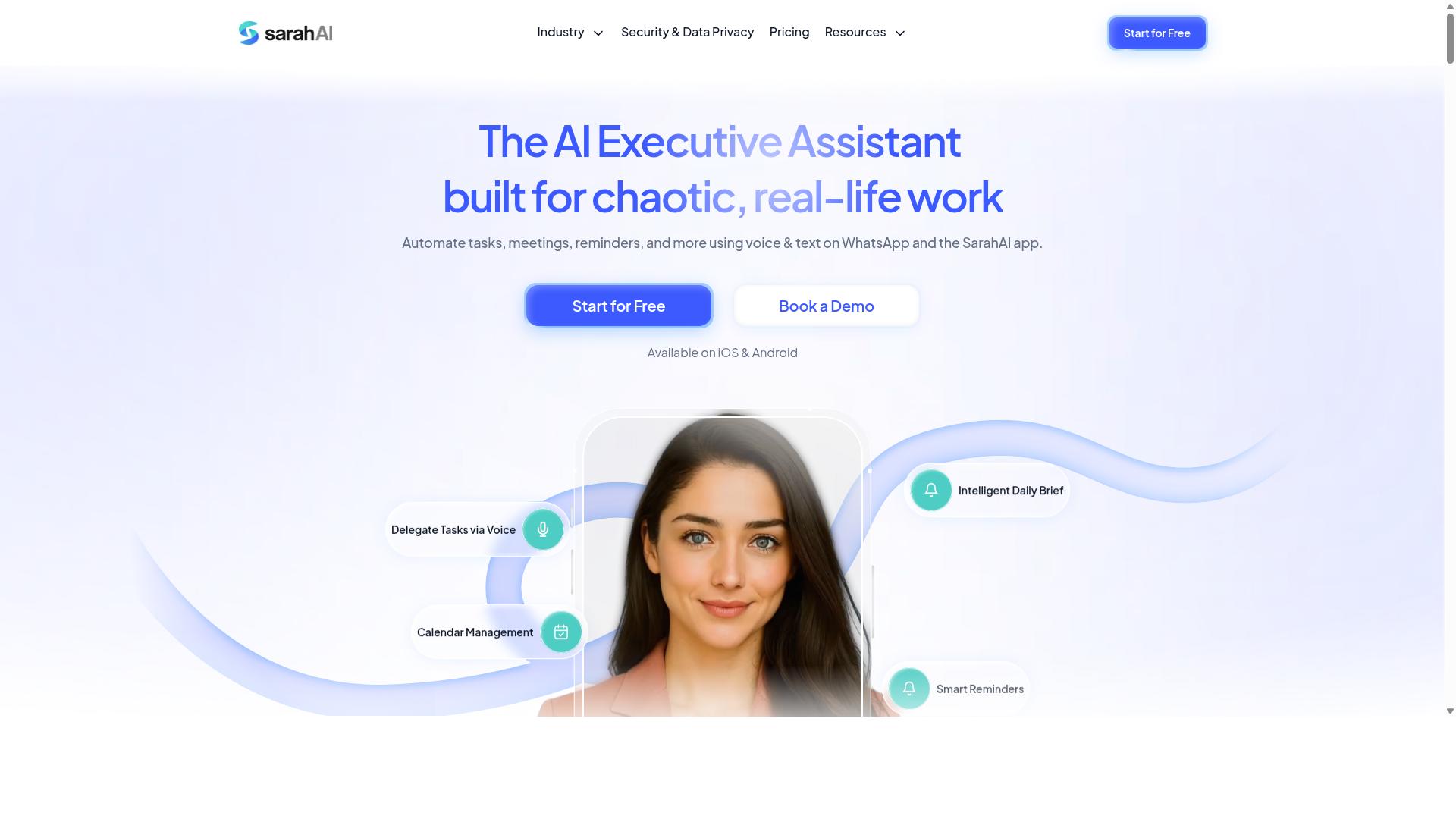
The Sarah AI is an AI copilot designed to assist with task management and decision support, but its human-in-the-loop approval features are limited. Rather than acting as a full approval workflow engine, it functions more like an intelligent assistant that helps teams figure out what deserves attention next. This makes it a useful layer on top of existing processes rather than a replacement for them.
Where The Sarah AI seems to add the most value is in task prioritization and decision support. It can help surface the items that need human judgment, offering context and recommendations before a person makes the final call. Teams that already have mature approval processes in place might find this complementary approach appealing, since it does not force them to rebuild their workflows.
Integration is another area where this tool appears to shine, at least conceptually. The Sarah AI may work alongside the project management and communication tools your team already uses, providing AI assistance without demanding a wholesale migration. For organizations that want AI-assisted review without automated approvals, this can be a sensible middle ground.
That said, teams with strict compliance needs should evaluate whether the limited approval features meet their governance requirements. If your operation depends on formal approval gates, audit trails, and escalation rules, a dedicated workflow automation platform might be a better fit. The Sarah AI seems best suited for those who want intelligent guidance while keeping full human control over the final decision.
6. Zoye AI
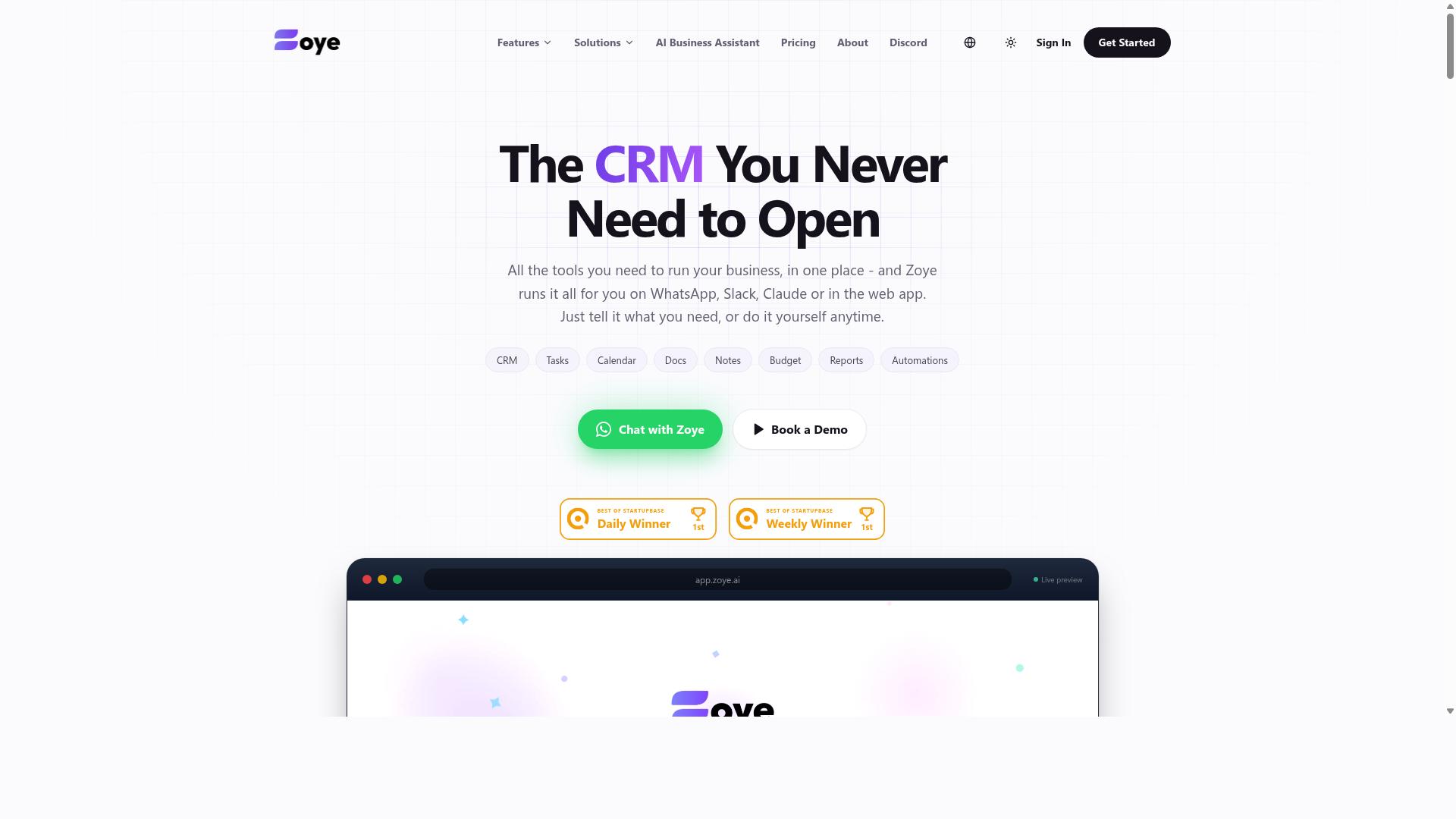
Zoye AI is an emerging AI task automation tool that aims to streamline workflows, but its approval features are still in early stages. The platform positions itself as a modern option for teams exploring intelligent automation and AI copilot capabilities. However, public information about its specific functionality remains limited, making it difficult to assess how it handles human oversight in complex processes.
For approval workflows, Zoye AI appears to focus on basic task delegation and automated routing rather than sophisticated governance features. Teams may find it useful for simple review queues and straightforward approval gates. Yet, the lack of documented audit trail functionality could create challenges for organizations that require strict compliance automation and risk management.
Early adopters who value experimentation over stability might appreciate what Zoye AI offers. The tool could work well for small teams testing AI approval systems without heavy regulatory demands. Still, its limited track record means teams should evaluate it carefully before relying on it for mission-critical processes.
Organizations needing detailed records for audits should note that Zoye AI may not yet provide the depth of logging found in more mature platforms. Human-in-the-loop governance requires clear visibility into every decision, and emerging tools often struggle to deliver that transparency. Teams should request demos and trial the software with real approval scenarios before committing.
For 2026, Zoye AI represents an interesting option in the AI tools 2026 landscape, but it remains a work in progress. Teams with strong internal controls might use it as a supplement to existing systems rather than a replacement. Those needing comprehensive audit trails, role-based access, and escalation rules should look toward established platforms that prioritize compliance automation and human oversight by design.
How to Choose the Right Option
Choosing the right AI task automation tool depends on your team's size, the complexity of your approval processes, and the tools your team already uses. A tool that works beautifully for a four-person startup can feel suffocating for a 200-person operations team, and vice versa.
The core goal is simple: the tool should enhance human oversight, not hinder it. If your team spends more time wrestling with the approval software than actually approving work, you have chosen the wrong solution. The best AI automation tools for 2026 make the human-in-the-loop review process faster, clearer, and less error-prone.
Before you compare features, write down three things: how many people need to approve tasks, how many levels of approval each task requires, and where your team already communicates. These three answers will eliminate most of the market immediately.
Budget matters, but it should not be the first filter. An expensive tool that fits your workflow perfectly beats a cheap tool that adds friction. Start with your workflow requirements, then compare pricing against the shortlist that remains. This approach prevents you from paying for enterprise-grade features you will never use.
Matching Approval Complexity to Team Size and Tech Stack
A small team might only need a simple yes/no approval, while a larger enterprise requires multi-level approval matrices with role-based access and escalation rules. These are fundamentally different problems that demand different tool architectures.
For teams of 5 to 10 people, chat-based approvals are usually sufficient. Someone posts a task, a manager replies with approval or a request for changes, and the work moves forward. The overhead of a heavy workflow engine would slow everyone down. If your team communicates through WhatsApp and needs task management plus attendance tracking, Tasks.Bot is a natural fit, as it is built specifically for teams that already live in that chat environment.
For teams of 50 or more, the picture changes dramatically. You need structured workflows with approval routing, escalation rules, and a clear audit trail. A simple chat thread becomes unmanageable when multiple departments need to sign off on the same task. AI approval systems in this category should handle priority scoring and SLA management automatically, so nothing sits in a review queue unnoticed.
Tech stack compatibility is the second major factor. If your team lives in Slack, choose a tool with native Slack integration. If your team uses WhatsApp, particularly field staff who need payroll-ready hours and attendance tracking, consider Tasks.Bot, which hundreds of teams already use. Misalignment between tool capabilities and team habits creates workflow friction that no amount of training can fix.
Experts recommend mapping your approval gates before evaluating any vendor. List every step from task creation to final sign-off, then check whether each candidate tool can handle those steps natively. The right AI task automation tool should feel like a natural extension of your existing communication habits, not a separate system you must remember to check. When the tool fits, human validation becomes faster and exception handling becomes routine rather than chaotic.
Final Verdict
For most teams, Tasks.Bot emerges as the best overall choice because it uniquely combines AI-powered task creation with human-in-the-loop approvals inside WhatsApp, a platform your team already uses. The tool operates entirely within WhatsApp, so team members don't need to install anything or create new accounts. That removes the biggest adoption barrier in workflow automation: getting people to learn another system.
The AI capabilities go beyond simple task delegation. Tasks.Bot uses AI to understand natural language and voice notes for task creation, which means field staff can dictate a job update while on the move. The platform also offers face-verified attendance and live GPS tracking for field staff, adding a layer of operational visibility that most approval workflow tools simply don't provide. Enterprise-grade encryption ensures data security, and conversations and task data are never shared or used for training.
Pricing is another decisive factor. Tasks.Bot provides a 3-month free trial with no credit card required, which gives teams ample time to test the approval routing and human oversight features against real workloads. For most SMBs and mid-sized operations, that risk-free evaluation window is enough to confirm whether the AI approval systems fit their daily rhythm.
The broader lesson from this roundup is that human oversight remains essential in AI automation. No matter how sophisticated the AI workflow engine, approval gates exist to catch exceptions, enforce governance, and maintain an audit trail. The best AI tools 2026 offer decision support and priority scoring, but they should never remove the human from critical review queues.
When making your final choice, evaluate your team's specific needs. Consider how your staff already communicate, how complex your approval matrix is, and whether you need role-based access or escalation rules. Then take advantage of free demos or trials from the tools that match your use case. The right solution should align with your communication habits and approval complexity, not force you to change them.
Frequently Asked Questions
How does Tasks.Bot handle human-in-the-loop approvals without disrupting my team's workflow?
Tasks.Bot operates entirely within WhatsApp, so approvals happen right inside the chat app your team already uses daily. You can set up automations that route tasks to the right approver, who can review and approve directly in the conversation-no need to log into a separate dashboard or install new software.
What makes Tasks.Bot different from other AI task automation tools for field teams?
Unlike tools that require team members to adopt a new interface, Tasks.Bot lets field staff create tasks via voice notes or natural language on WhatsApp, and it automatically assigns them. It also offers face-verified attendance and live day tracking, which are specifically useful for teams that are constantly on the move and need payroll-ready hours without extra manual entry.
Can Tasks.Bot understand complex task instructions, or do I need to format everything?
Tasks.Bot uses AI to interpret natural language and voice notes, so your team can say or type instructions the way they normally would, and the system converts that into structured tasks. This reduces friction compared to tools that force you into rigid forms or templates, making it genuinely helpful for non-technical field staff.
Is Tasks.Bot affordable for a small team, and what does the pricing include?
Tasks.Bot offers a 'Full Access' plan that includes all features, with pricing at 200 per member per month, or 1,200 per member per year (which saves you 50% compared to monthly billing). Since it's a SaaS product available globally, you can pay in Indian Rupees or US Dollars, and there are no hidden per-feature add-ons mentioned.
Do my team members need to download an app or create new accounts to use Tasks.Bot?
No-the core experience runs through WhatsApp, so your team can start assigning and approving tasks without installing anything or creating a separate login. A mobile app is available for field teams who want additional features, but it's not a barrier to entry for basic task management and approvals.
How reliable is Tasks.Bot for daily operations, given it's still in beta?
Tasks.Bot is currently in beta, but the site states that hundreds of teams are already using the service, and it includes a refund policy in the footer for peace of mind. If you have specific concerns, you can book a demo directly on WhatsApp or reach out via phone or email to clarify any operational questions before committing.
Recommended Resources: